July 13, 2026
Nobody's Good at It Yet
I've been working with AI for a few years now and I still wouldn't call myself an expert at it. Coders, AI engineers and the "I've been integrating AI systems before ChatGPT was popular" kind of people have a leg up on most of us.
Of course, all that's subjective.
Admitting a lack of expertise in something you help people with can sometimes minimize credibility.
At the same time, it's liberating to be experimenting with something early in the game and sharing what you know as you go.
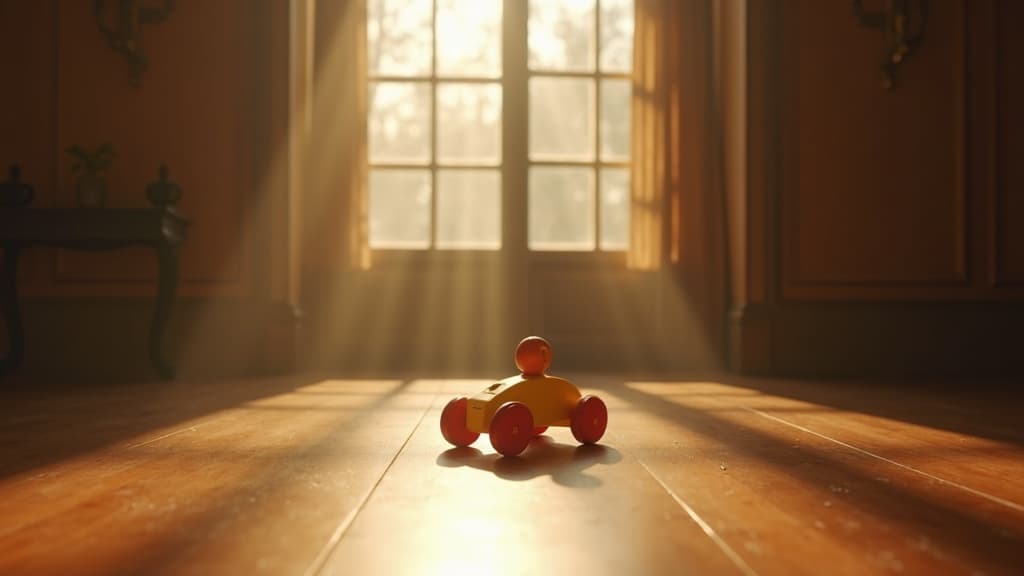
For the most part, there's no twenty-year AI veteran who can tell you you're doing it wrong, because nobody has settled what right is yet. It's a toy on the floor and we're all turning it over in our hands.
The last time this happened was the late nineties. A few people picked up a strange toy called the internet and messed around with it. The way they played became the thing the rest of us live inside now. Btw, what did we learn with that "toy" and what would we do differently this time?
We're standing at that point again. The creative energy we pour into this thing now is the shape it takes later.
I find that thrilling. I also notice how few people are willing to touch it without knowing what it's for.
And I think I understand why.
I'm not just talking about AI innovation here either. The scope is much broader.
You can master a game. Most accomplished people have. There's the school game: good grades, the degree, the network, the title that lands well in an elevator. There's the business game: the early win, the years of refinement, the thing that finally worked (maybe even an exit). You learn the rules. You get good. You get very good.
And then one day you're standing on the other side of it, in the nice house, with the system running smoothly. Something is off and it's hard to name.
Congratulations. You mastered Monopoly.
Ruffled feathers not intended.
Here's the good news: the mastery is real.
The board was real. We're all standing on the shoulders of the people who built those boards. A finite game is a good thing. It has rules, it has an ending and it can be won.
You won.
But a trophy makes a poor compass.
Go looking underneath the competence and there's often a kid in a classroom who followed his imagination and got told no.
"Not like that."
"This is how we do it here."
A young mind hears that enough times and writes one line of code that runs for the next thirty years. Follow the rules or you'll get burned.
The kid grows up. The line keeps running. It wears a "business jacket" now and calls itself discipline.
So the system is smooth. It's familiar. Some days it runs without you. Part of that smoothness is skill you earned. And part of it is obedience that simply got very, very good at its job.
Which leaves the question sitting there in the quiet.
Does it feel Alive?
Now let's zoom out a bit. Society level.
Those systems were never self-powered. They ran on our creative energy, routed into them by design. That's what they were built for. So when you draw your creativity back out, the system doesn't fight you. It just stops working. Meanwhile that same energy, kept, starts building something that's actually yours.
None of this is a case for burning the bridge. You have people who depend on you. The "swing for the fences" is rarely required and rarely wise.
You inch.
You take one step in the direction that feels alive and you find out what happens. You'll get it wrong. You'll pick the thing up, turn it over and set it back down. A kid with a new toy doesn't know what it does either. He isn't embarrassed about that. Nobody in the room expects him to figure it out in ten seconds. It would be pretty weird if they did.
And yet, we do it to ourselves constantly.
So the shift is smaller than it sounds. It lands at the level of who you are rather than what you do.
You stop needing to be good at it before you're allowed to do it.
That's it right there.
The people who look like they're ahead of us haven't arrived either. Nobody has. We're carrying ancient emotions and godlike tools through a decade that resembles no decade before it. It's a chrysalis. A chrysalis is chaos on the inside. There's no one coming to certify you.
Which means you're not under-qualified.
You're early.
Build one room this way and you notice something later, once there are a few of them. They connect. The rooms were always one house.
If you want somewhere to put your hand this week, make one alive thing. One small real thing, in under an hour, built out of your own aliveness instead of somebody else's plan.
You might be bad at it. Most people are, at first. They were trained out of it and the training took.
Do it badly. Do it anyway.
That's how the "credential" gets made.
Lane
Enjoy the Journey
Something in you that wants to move? One Alive Thing is a free mini side quest, a finite adventure you choose inside the Infinite Game. Find it, name it and make it real in under an hour.
Start your One Alive ThingGet new writing by email
The whole essay, straight to your inbox. Plus a breadcrumb at the end.