October 7, 2026
There's Nobody at Everest Base Camp in September
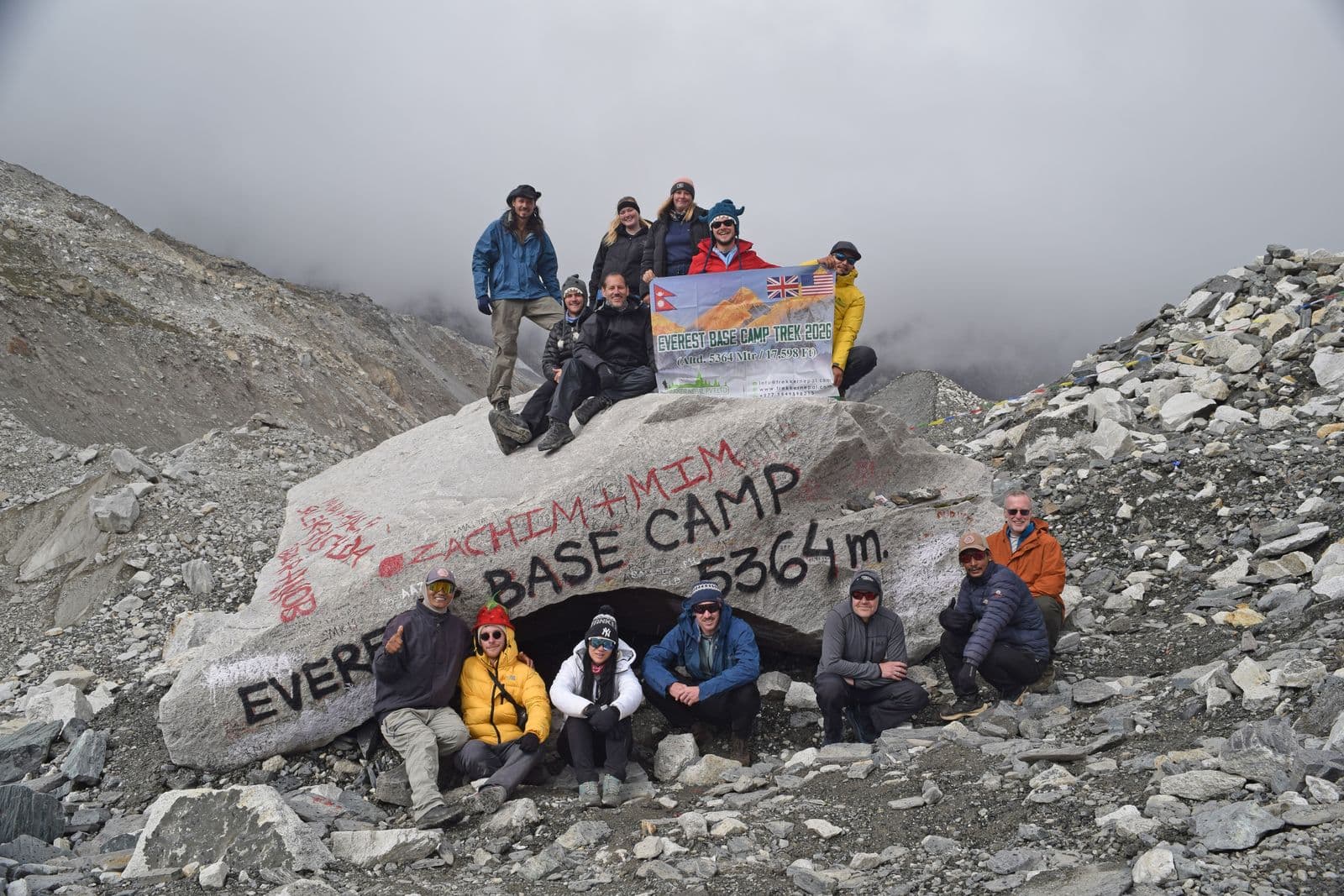
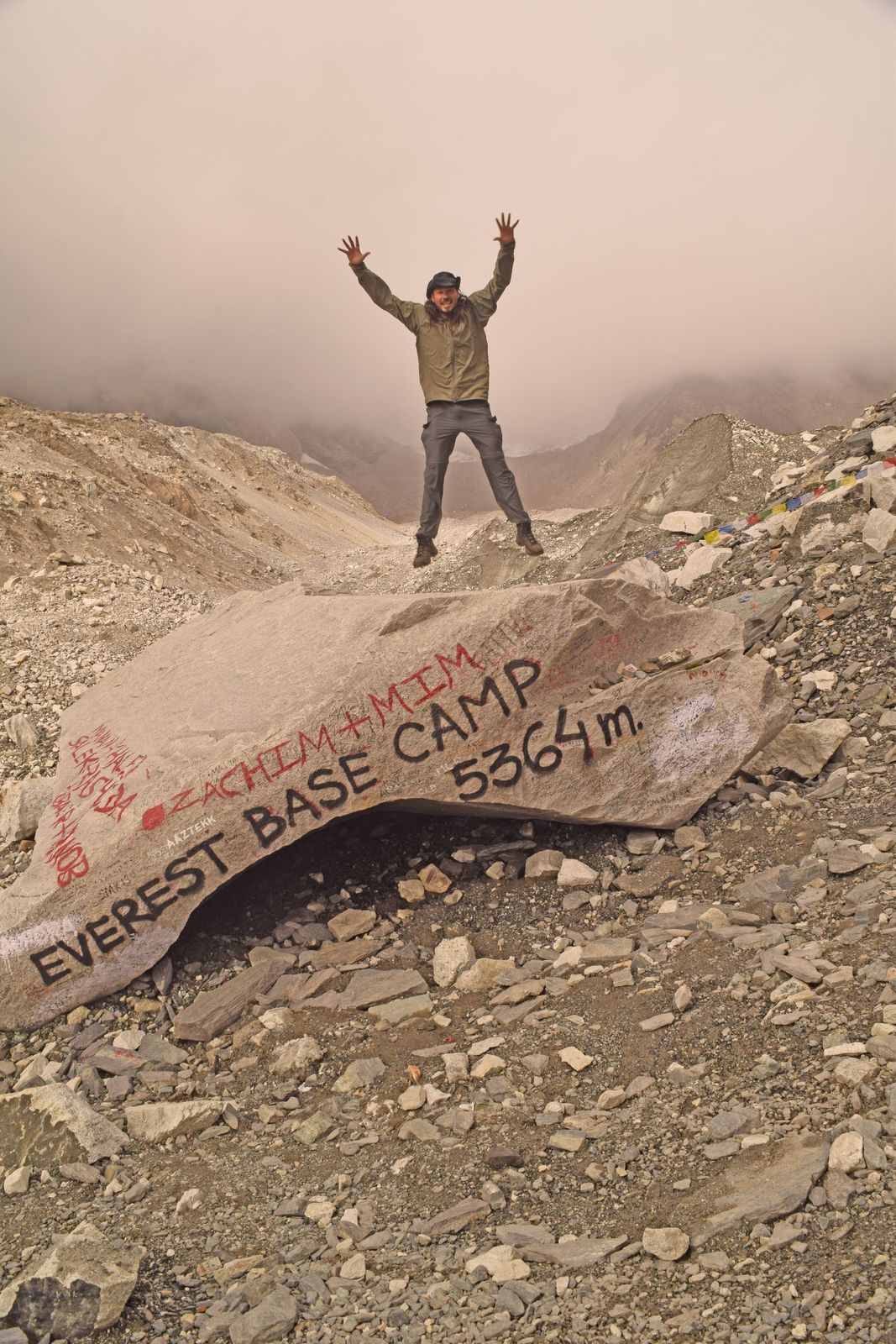
Everest Base Camp is a big rock with spray paint on it.
That's what's there in September. "Everest Base Camp" and the elevation painted on a boulder at 5,364 meters, at the edge of the Khumbu Glacier.
I didn't expect that. I hadn't done much research, so I unconsciously expected people. Tents, crowds, the scene from the photos. That tent city only exists during expedition season, generally March to May, when climbers stage for the summit.
We got there in the afternoon. One trekker and a guide ahead of us. A few tiny groups of one or two people passing us on their way down. Otherwise it was our group of eleven (plus guides), the painted rock and the biggest mountains on Earth.
That was part of the thrill. Sometimes I like to go in blind. I felt prepared for the physical side of it, but I didn't want to know every stop and every tea house. I wanted it to be new as I did it.
The trip came to me through my friend Ashley Johnson. He and Lee Smith came to Peru with me last year. They were the two people I knew going into Nepal.
Last December Ashley mentioned that someone was putting together a trek to Everest Base Camp. I said, "Oh yeah, I absolutely want to do that."
I had no plan to write about any of it. I knew it was going to be fun. I knew there were a lot of uncertain things. I knew I was gonna scope out Everest (for a later trip).
Physically I was very capable. Mentally I was very ready. I was just like a kid in a candy store, wide-eyed and receiving what each day brought.
Unplugging from my normal environment and my normal rhythm, new people, new conversations, a well-worn trail and being surrounded by nature nearly 24/7. That was my energy and intention going into it.
I'm a Green Beret veteran. I have experience in the Arctic, I've climbed Kilimanjaro and I live in Colorado, where I rucked with a heavier pack in 90-plus degree weather leading up to this trip. I'm not new to carrying a pack for days. I'm not new to climbing mountains.
So I had a lot of advantages going in.
Our group was eleven people. Business folks, volunteers who work in different countries, different ages, men and women. Almost everybody was from the UK, plus Latvia. I was the only American.
Sometimes a trip like this is a tight group of like-minded people. This one brought together people from several different walks of life. That diversity was probably the biggest gift of the whole trip.
The flight from Kathmandu to Lukla is short, into what they call the most dangerous airport in the world. Ours was super smooth both ways. On the way out, the plane landed, the people got out and the engines never stopped. We hopped on and were back in the air within minutes of it touching down.
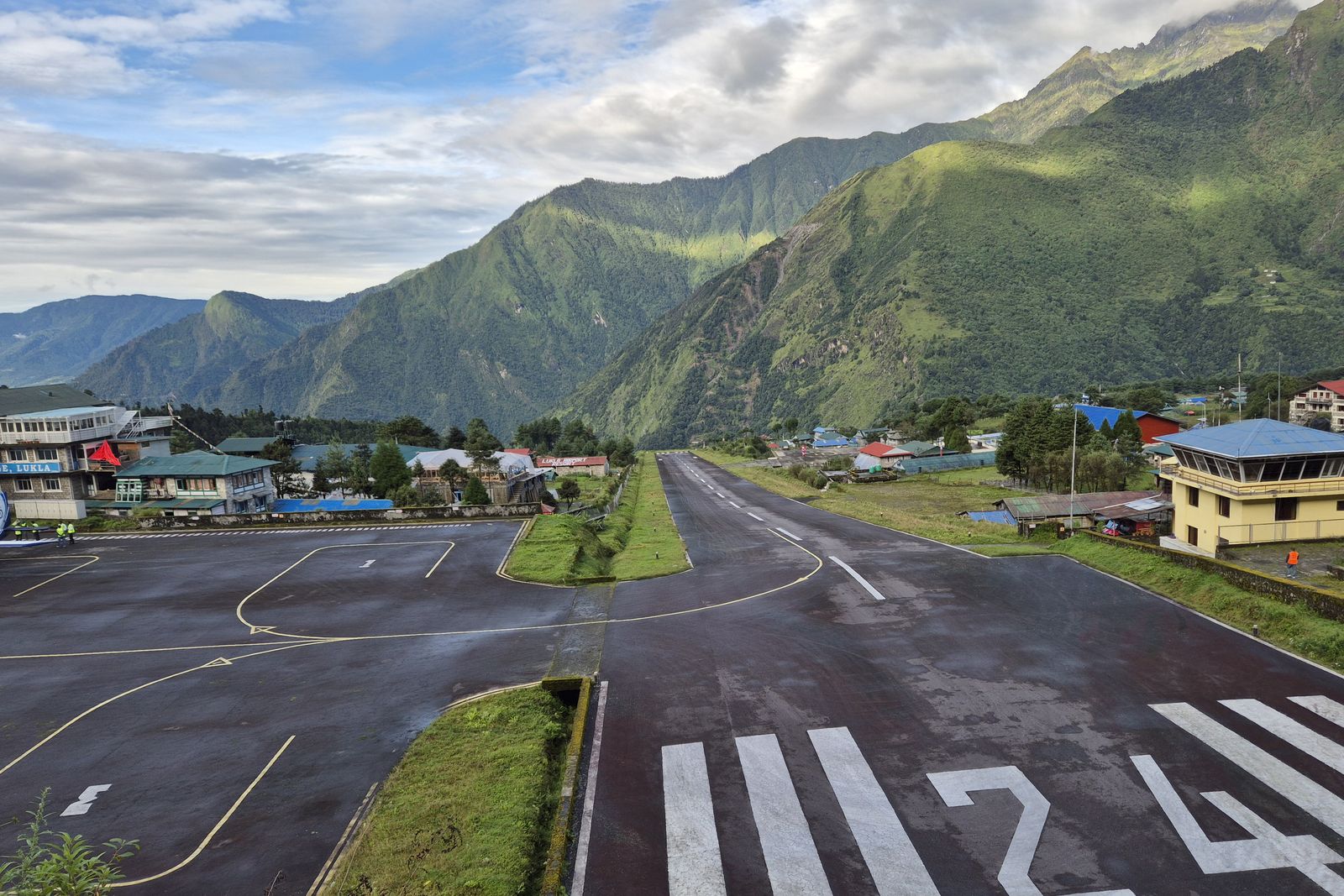
Early September is the tail end of the monsoon and the very start of the trekking season. Most people wait for October and November, after the rains are completely done.
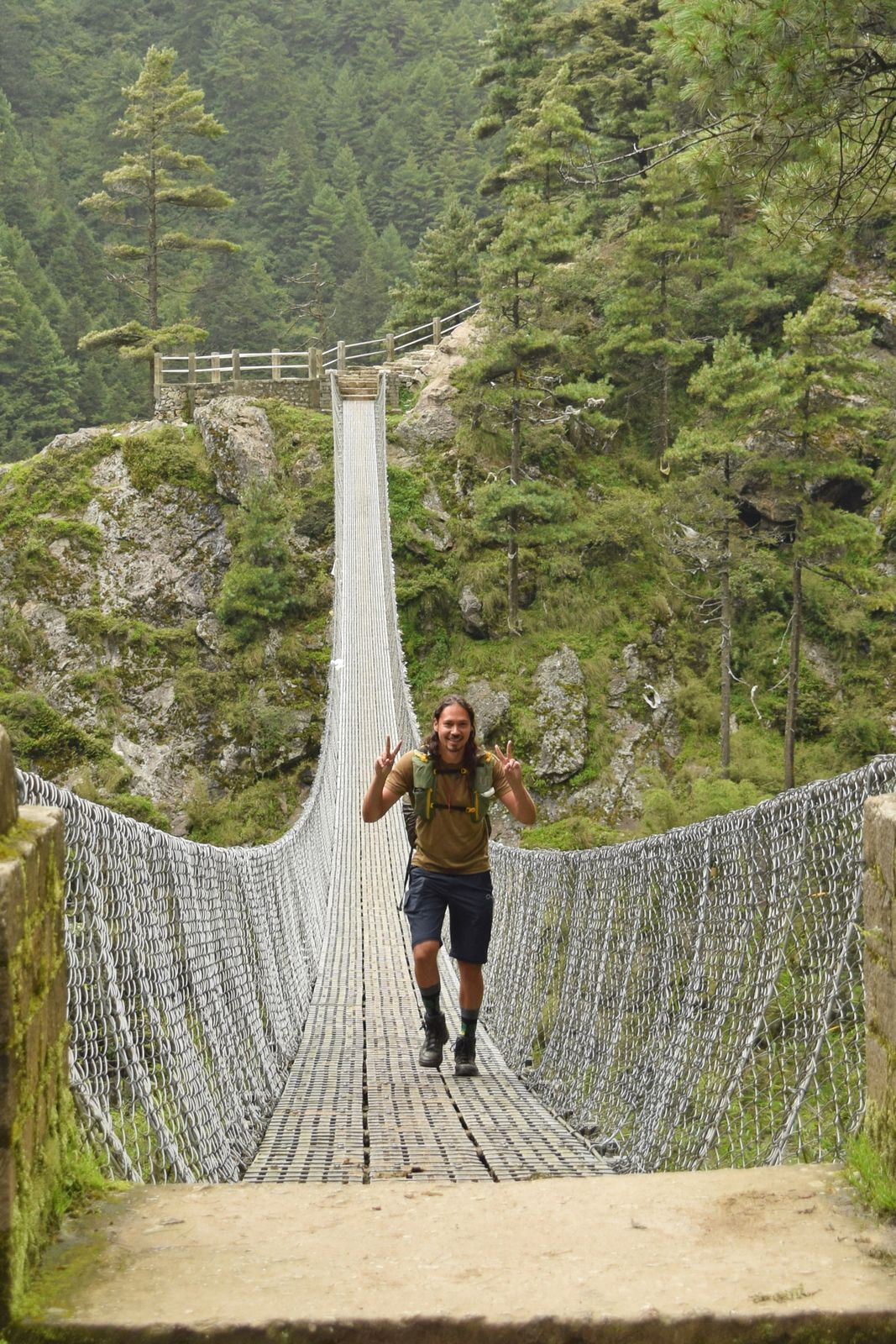
Going when we did meant greenery and waterfalls you mostly miss in the regular season. Rushing tributaries feeding the river you follow and cross and recross on high suspension bridges for days. Clouds rolled in on most of the days. It was still beautiful.
At every tea house we stayed in, we were the first guests of the season. At the very first one, in Phakding, they welcomed us with white Buddhist scarves carrying mantras and blessings. First night of the trek, ginger lemon honey tea on the table, a blessing scarf around the neck.
The days found a rhythm fast. Wake-up call around 6:30. Breakfast at 7. On the trail by 7:30. The times shifted day to day, but that was the rhythm: wake up, breakfast, leave.
We reached Phakding around midday on day one, had some tea and rested the first half day. Day two climbed to Namche Bazaar, the hub of the whole trek. It's not quite the halfway point, but it's the biggest stop on the way up to base camp.
We stayed one night in Namche and then walked up to a museum where they make art out of recycled plastics. Our group bought almost zero plastic water bottles the whole trek. We filled from the taps and used purification tablets. Everybody was fine. The one exception was Gorak Shep, up above the glacier, where there's no running water.
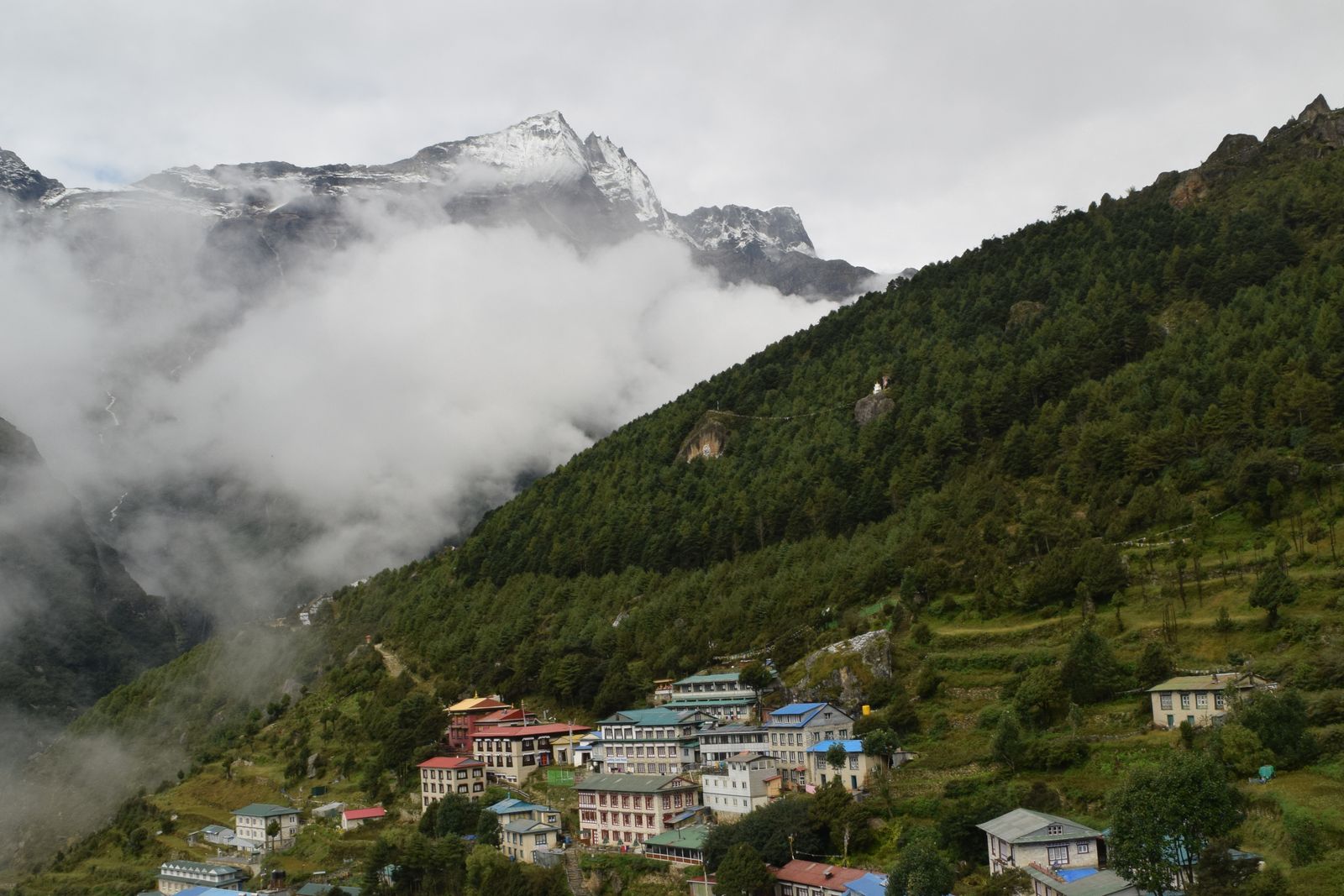
From Namche the route climbed like a staircase, sleeping a little higher each night. Kyangjuma. Pangboche. Dingboche, with an acclimatization day: a climb up high and back down to the same little bed.
Our route was built by Wangda Sherpa and his team at Trekker Nepal, who guided us the whole way. Wangda picked the spots and a pace that let us acclimatize without moving too fast. His guides were incredible. They ran daily oximeter checks and carried oxygen, which got used a couple of times for nothing serious.
All the logistics made it super easy. All I had to do was walk.
The tea houses at the lower villages had rooms with two beds, pillows and blankets. You could charge your phone in the room at no extra cost. Higher up, charging and wifi move to the common area for a fee. Hot showers started around 500 rupees and climbed to about 800 at the higher elevations. Some places had only one hot shower, so a group figures out the rotation. It's pretty easy.
Nearly every menu on the mountain reads the same: dal bhat, fried rice with egg, chow mein, noodles. A few places add Western dishes like spaghetti or a chicken sandwich. We often had noodle soup for lunch, light enough to get right back on the trail, and dal bhat for dinner. Dal bhat also goes by Nepali set. You'll eat a lot of it.
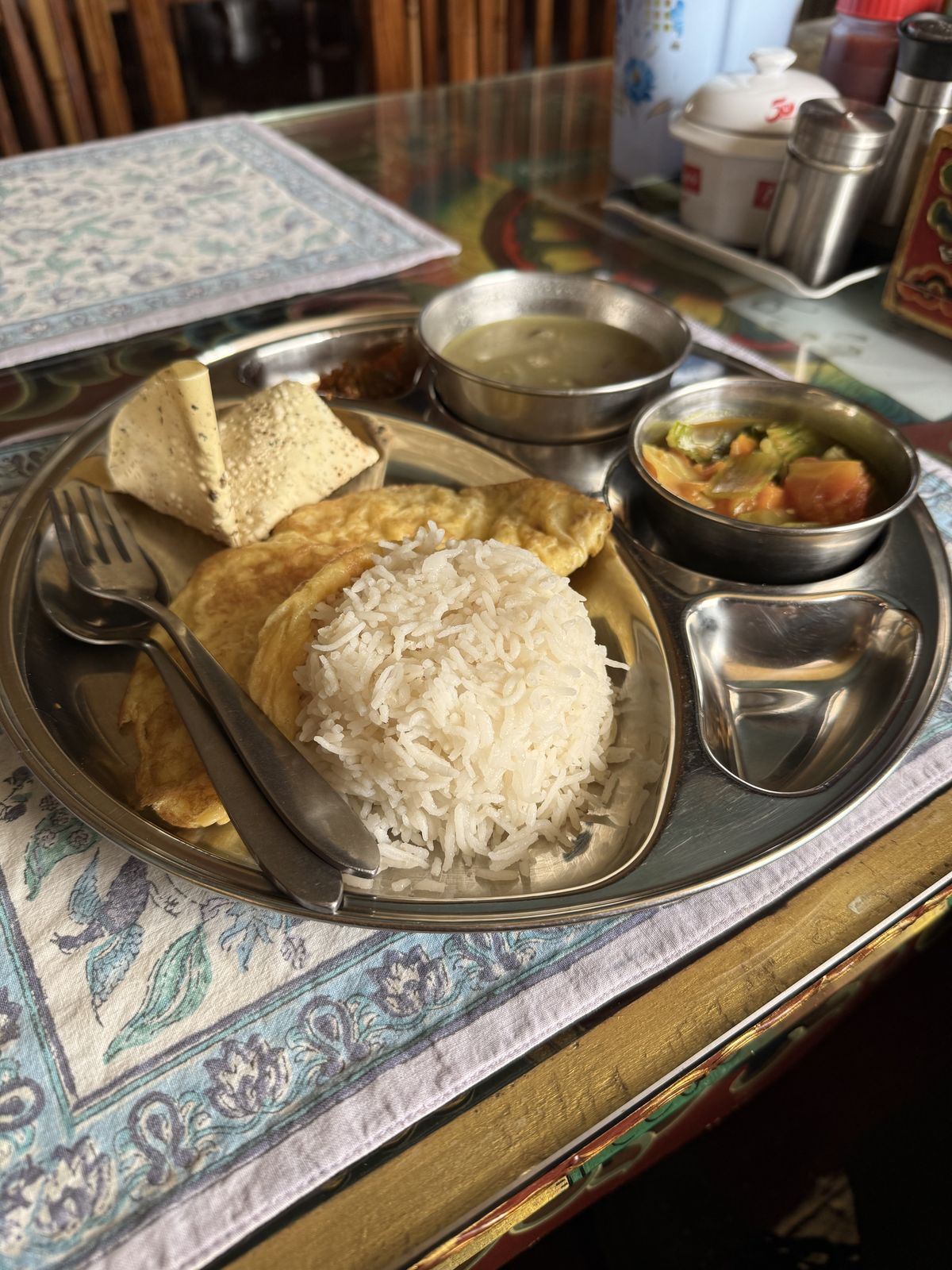
The half days were some of the best days of the trek.
On an acclimatization afternoon there's a certain relaxation and spontaneity that comes from having nothing to do but drink ginger lemon honey tea, eat dal bhat and see where the conversations naturally go. We had amazing conversations as a whole group and in smaller groups, in the tea houses and on the trail.
It was nice to put a pause on all my projects, work and writing and just be present doing something completely different from my normal weekly rhythm. I felt really connected to nature and present with the process.
The days were so full that I barely journaled and read nothing at all. I was full of what we did.
Then the trail got high.
The rule of thumb everyone talks about is true: no more than about 500 meters of sleeping elevation gained in a day, and an acclimatization day for every thousand or so. Hydrate constantly. Eat as much as you can. Get fit beforehand. Fitness can only prepare your body so much.
Then there's the mindset. Your body is adapting to an environment it may never have been in before. That adaptation takes time. Most of it happens while you sleep. When the pressure shows up in your head, or the headache or the shortness of breath, you can meet it as the body adapting. Give it time. Allow your body to rest.
The oximeter readings are useful. They're also just a number. Someone who feels fine can see a low reading and get freaked out. The true intelligence is your body communicating something is going on. It'll be very apparent: a headache, pressure, shortness of breath, nausea. You do all the measures, do everything right and then you address the thing when it shows up. Tell your guides immediately. That's what they're there for.
For me the altitude arrived on the day we walked to base camp itself. Lobuche to Gorak Shep, then on to EBC and back. That was my hardest day. A long day, a fun one, with a steady pressure in my head as we were heading to base camp.
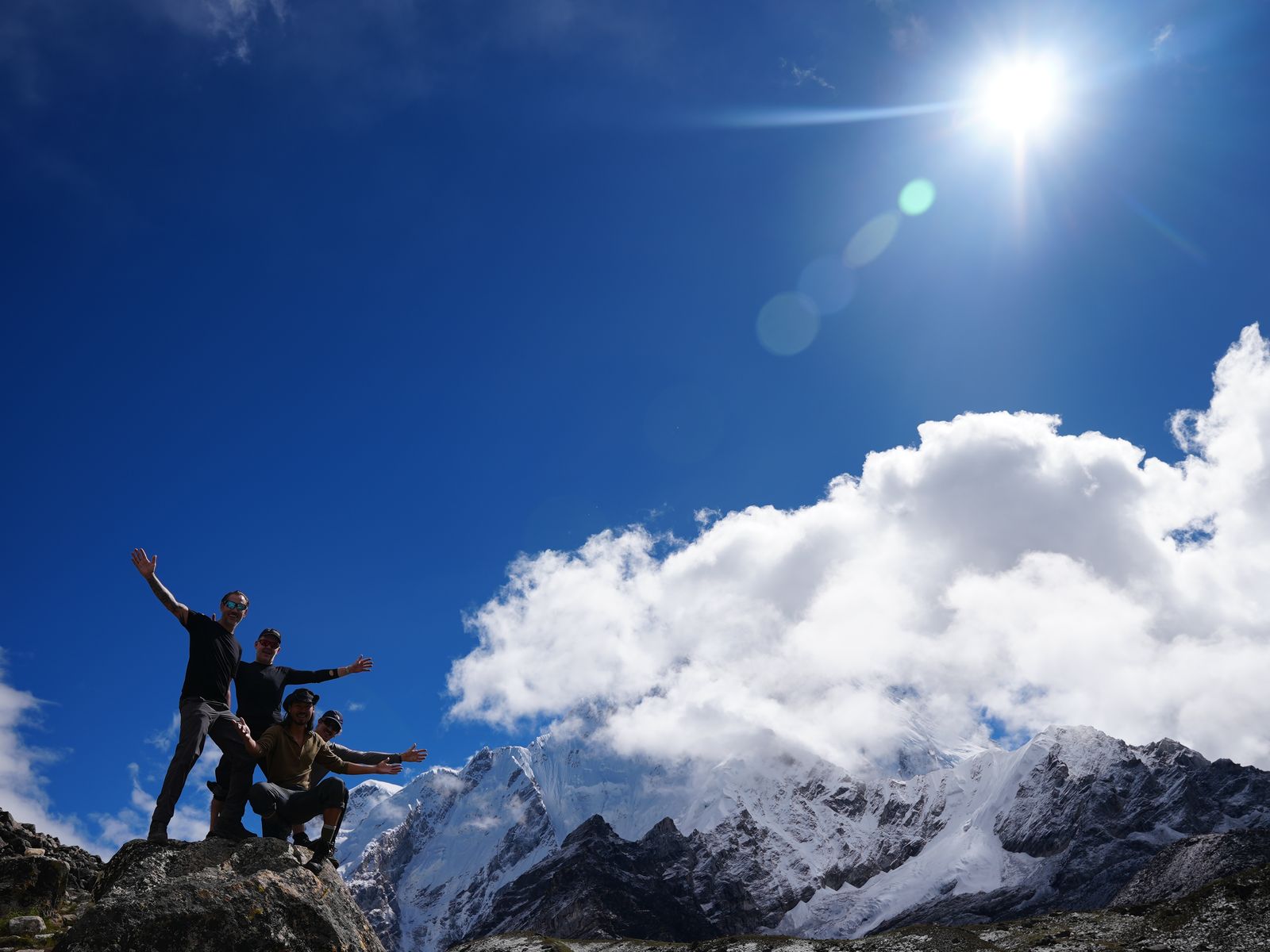
My natural approach is to take medication only when I have to, so I rode it out for several hours. I wanted to experience how long that pressure would stay. I probably made it harder than it needed to be. I could've taken an ibuprofen an hour or two into it and been just fine. As soon as we got back to Gorak Shep, I took one. 45 minutes later I was fine. That was the only medication I took the whole trek.
A couple of people in our group used Diamox. Me personally, I don't recommend it unless you feel you need it, though it can be helpful. That's my perspective, not medical advice. Consult your doctor lol.
The next morning was my favorite part of the whole trek (as far as scenery).
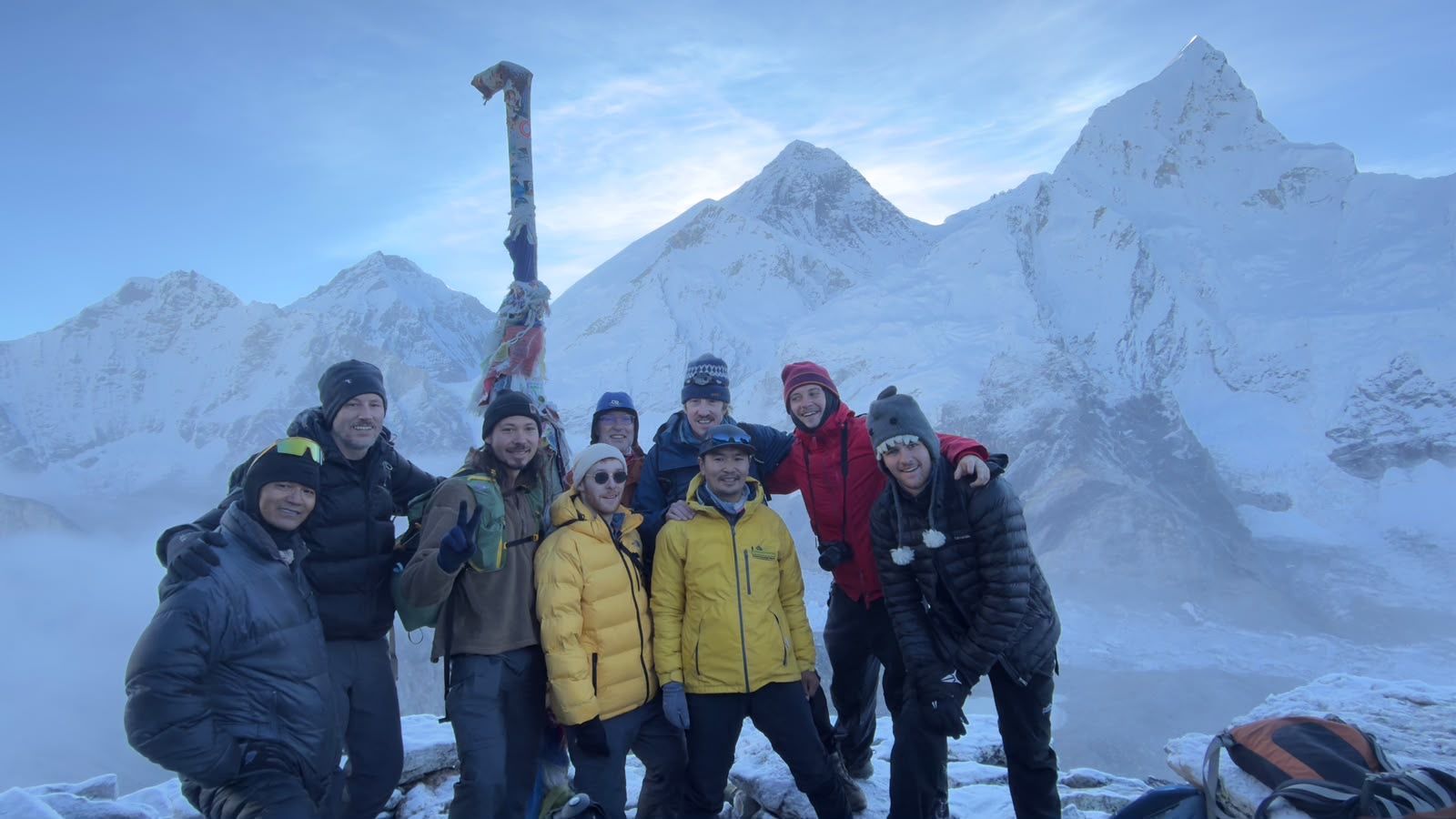
Wake at 3:30-ish, out the door by 4, climbing Kala Patthar in the pitch dark with headlamps. We caught some beautiful nighttime photos on our phones. Then the light came in a little more at a time, into a slow "golden" hour.
We stood on top of that little mountain among the absolute giants of the Himalayas and watched the sunrise crest exactly over the top of Everest.
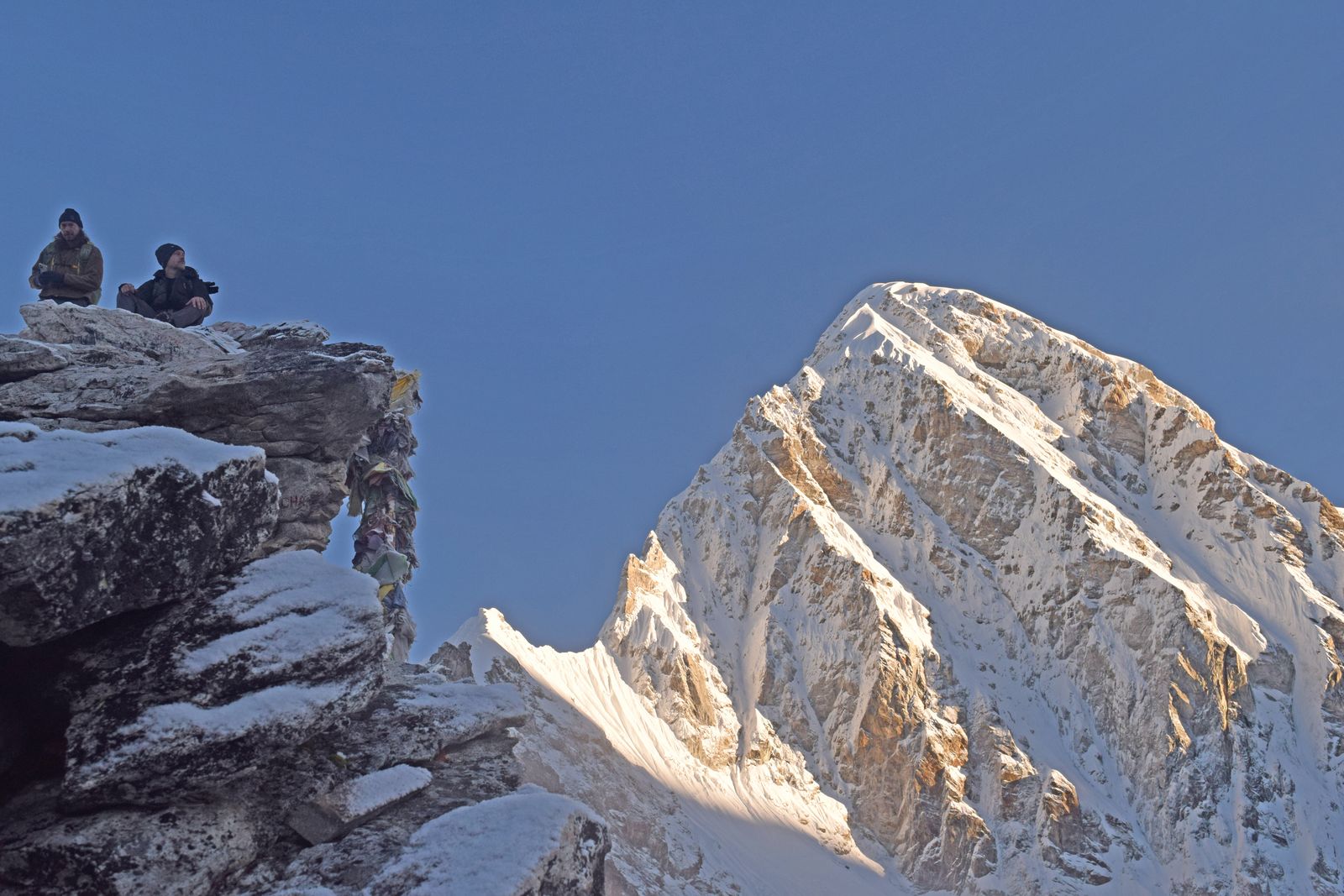
It was the easiest morning of the trek for me. For most of the group it was the hardest.
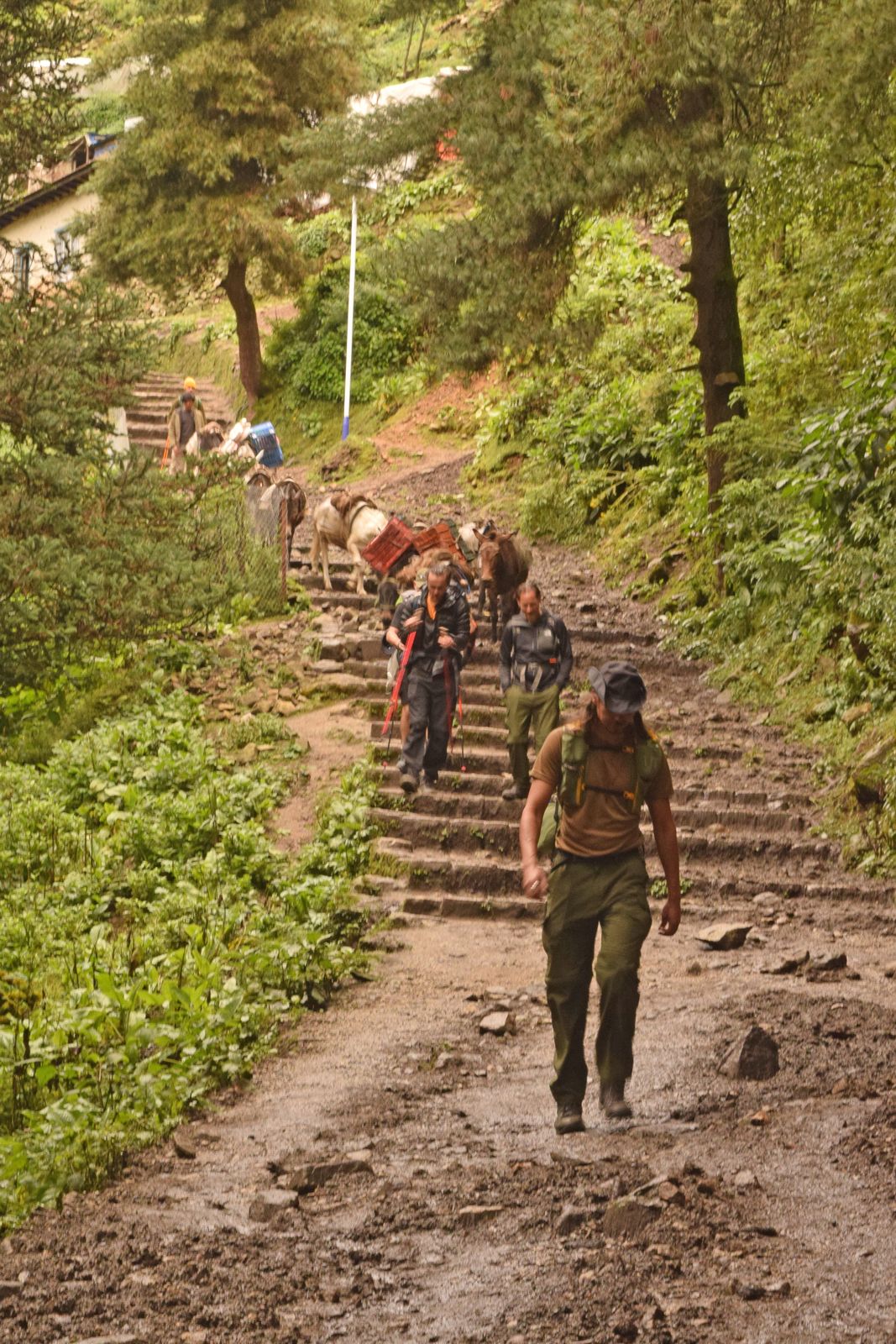
The way down took three full days, around 20 kilometers each. Fun days, and long ones.
This is the stretch where knees usually have something to "say". Nobody in our group got injured, but if your knees carry some history or you're a little older, this is the part to train for. It's also where trekking poles are most valuable. Nine of the eleven of us used poles most of the time. I didn't, because I'm used to carrying heavy packs long distances without them. The guides never used them either. Do the research and decide what's right for you.
On certain stretches, horses are available. We saw people ride when fatigue or a sore knee asked for it.
The itinerary had us sleeping in a smaller village past Namche on the way down. For days beforehand we'd been joking about how great it would be to stay in Namche again instead. Everybody wanted it, so that became the plan.
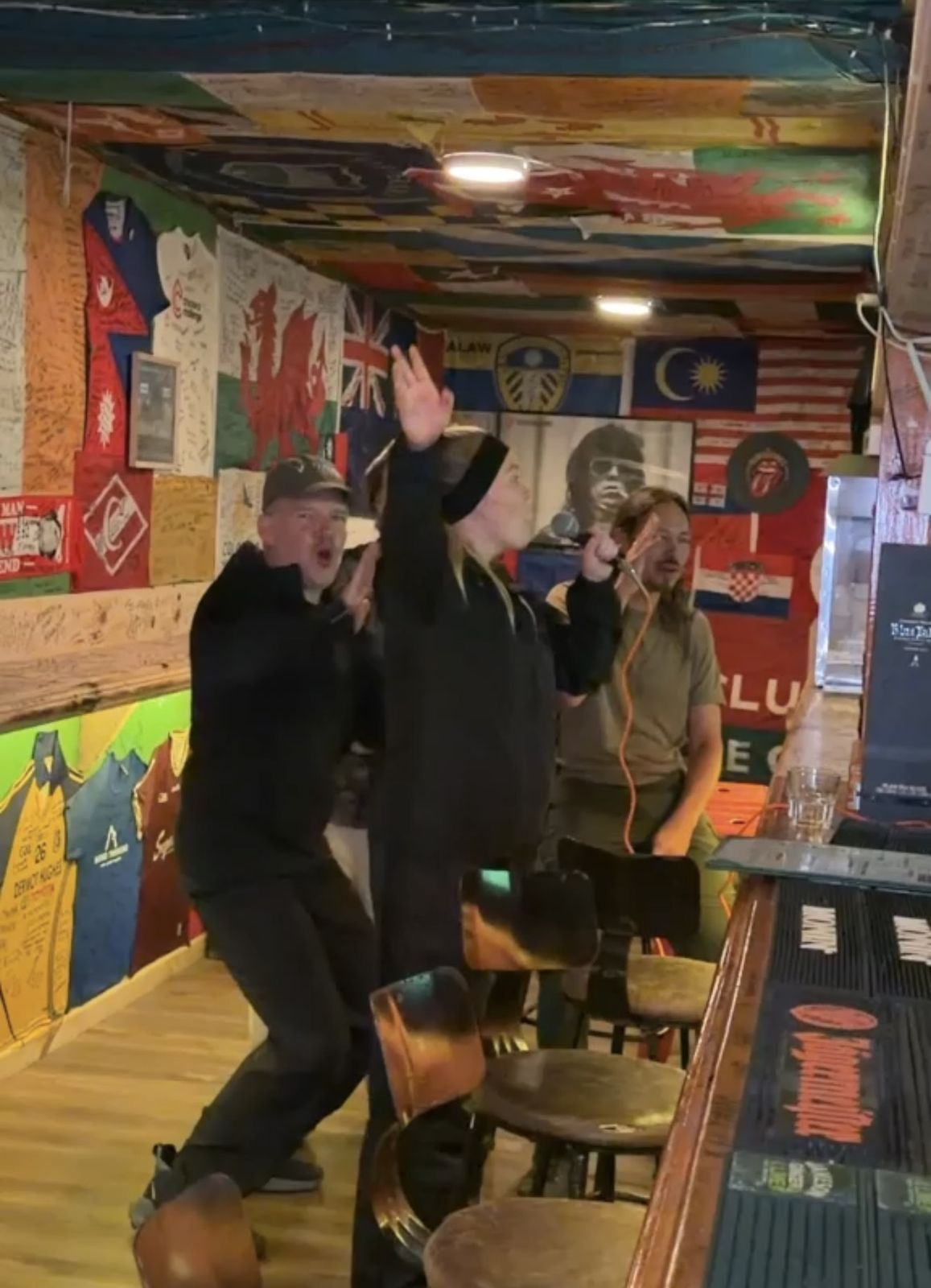
So our second-to-last night was pool and karaoke for a few hours at what was claimed as the world's highest Irish pub, in Namche Bazaar. We had a blast.
The people were very kind.
Warm smiles, namaste and kind eyes, over and over, village after village. High fives with little kids along the path.
Walking through one very small village, I passed a little girl, maybe two or three years old, with this open-eyed curiosity. I waved to her, very gently. She waved back. I bent over, reached out my hand and she placed her tiny hand on my fingers.
Kindness, curiosity, openness and receptivity, all in one small moment. It's one of the most cherished little moments for me.
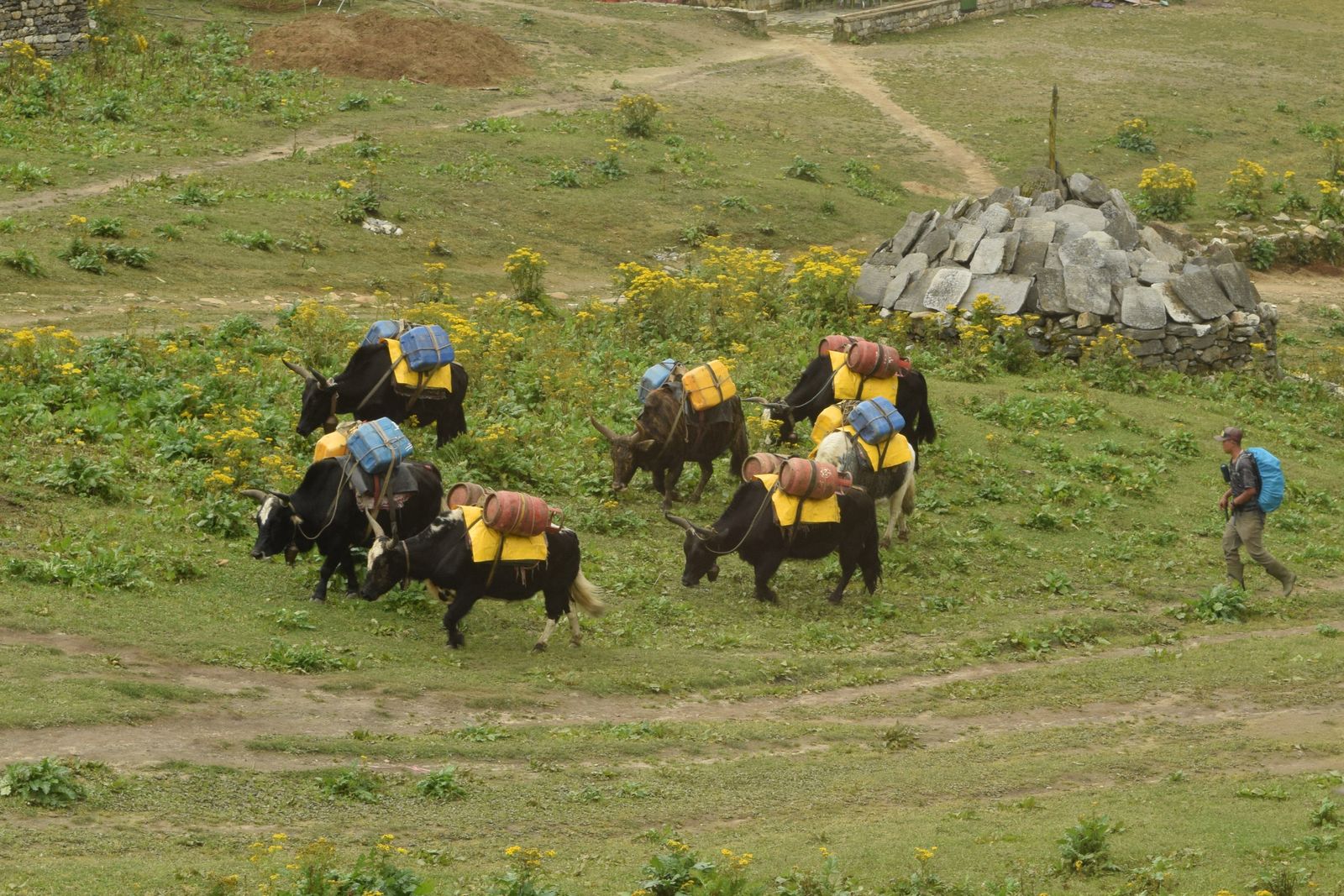
It's a different world up there. People have different kinds of jobs. Everything that reaches the higher villages is carried up by porters and yaks: the materials, the fuel, the food.
Noticing that contrast with my own life made me grateful for what I have, what I'm doing, who I'm becoming and what I'm building.
After the trek, Wangda invited our whole group into his home for a home-cooked meal. He gave us certificates and white Buddhist scarves carrying mantras and blessings. He didn't have to do any of that.
Trekker Nepal is a small family company. The guides with us were people Wangda grew up with in his very small village. You can tell his heart is in it. It's all those little tiny touches that make it more cherished.
We weren't being filtered through a large organization. We were being taken care of by a family and a community.
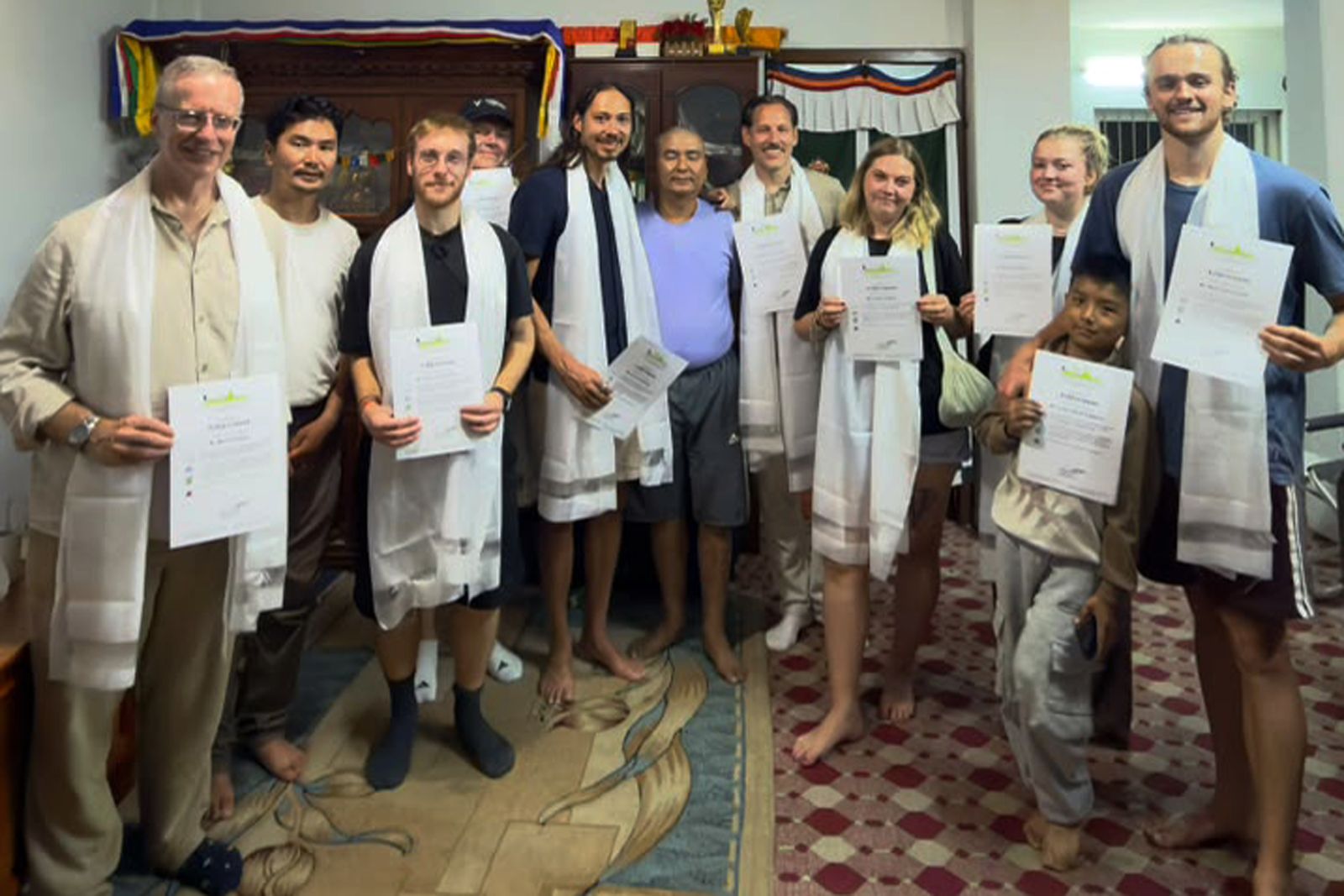
Then Kathmandu.
If you do something like this, give yourself three or four days on your own afterward. I had five. Some of that was meals and exploring little places with people from the group. Most of it was massages, downtime and reflection.
Twelve days that full give a lot to digest. The quiet days after are where the conversations settle and the subconscious distills everything the trip held into something graspable, actionable and moldable. That's where I recalibrated life and business and found new perspective. This article is part of that reflection.
Those days gave me more specificity on where I'm heading and on the architecture I'm building for my life. They let me feel into the textures that move a life even more towards what I "get" to do.
At home in Colorado I have well-worn (amazing) rhythms that nourish me. They're how I get into my flow state and do the things I love to do. It's a very deliberate and intentional way of living. That's good for the most part. I also like to go into the unknown, the uncertain and the rustic.
Different parts of the world offer different ways of living. Those environments reflect truths that have probably been waiting for me to become aware of them.
Although this was different from my normal week, it's all part of my formula, my "playlist" of living.
I live by a mindset of playgrounds of exploration: being present with each playground in turn. Nepal was one huge playground holding smaller ones inside it: nature, culture, food and new experiences.
I like to experience a new place once a month-ish. A few times a year I traverse across the world into a different environment, culture and language for a while. Nepal was an incredibly beautiful gift inside that rhythm.
The route, in brief
Twelve days, as booked with Trekker Nepal. Fly Kathmandu to Lukla and walk to Phakding the same day. Up to Namche Bazaar, then a gentle staircase through Khumjung and Kyangjuma to Pangboche and Dingboche, with an acclimatization day at Dingboche. Then Lobuche. Then Gorak Shep and Base Camp itself in one long day, with Kala Patthar at sunrise the next morning.
On the way up most days ran about 8 to 11 kilometers. The way down was three full days of around 20 kilometers to Lukla, with the night in Namche the whole group voted for.
A trek, not an expedition
An expedition is technical mountain climbing, usually to a summit. A trek is basically a long hike. The Everest Base Camp trek has no technical climbing anywhere on it. If you can put one foot in front of the other and you respect the altitude, this is available to you.
It's priced like a long hike too. With flights, food and accommodation before and after, you're looking at a couple thousand to several thousand dollars. Trekker Nepal is more affordable than you think. Their site lists current prices.
How hard is it?
The walking is moderate. There are rustic conditions and challenges that aren't overwhelming but are definitely present. My legs never really got sore. They might feel it slightly at the end of a day. The next morning it was like I had brand-new legs.
The altitude is the real variable. What keeps you safe is pacing: limited elevation gain each day, acclimatization days built in and guides who watch you closely. My hardest day was the push to base camp itself. For most of my group it was the pre-dawn climb up Kala Patthar.
When to go
October and November are the classic season: clear, dry and busy. Early September, when we went, is the tail of the monsoon: waterfalls, green valleys, empty tea houses, some cloudy days and a near-private base camp. It was also warmer than I expected. I didn't need a lot of really cold weather gear.
Spring, generally March to May, overlaps with expedition season if you want to see the tent city.
Training
Give yourself two or three months of intentional training, more if you have a long way to go. Train with a heavier pack than you'll carry. I trained with around 35 pounds and carried maybe 15 on the trail, so it barely felt like I was wearing a pack.
Put on 25 pounds or more and hike with it once a week at minimum, ideally more. If you can get to altitude once or twice beforehand, do it for the confidence in your own body alone. That's half the battle. The more that you train, the easier the actual thing is going to be.
Learn the "rest step". Every time you step up, fully straighten and lock out your leg for a tiny moment. That momentary lockout lets your skeleton carry you instead of your muscles. Those microseconds of rest for your muscles add up over twelve days. I've practiced it for years and I tell everyone about it.
What to pack
Trekker Nepal will give you a full packing list. This is mine.
A 35 to 40 liter daypack. Inside mine: a waterproof bag holding everything, rain jacket and rain pants, an extra shirt, layers, three liters of water in three one-liter bottles, snacks, a headlamp, a notebook with a pen and a small medical kit. An Outdoor Research Gore-Tex sombrero handled sun and rain nearly all the way to base camp.
For the cold: a buff, a beanie and two pairs of gloves. I never used the thicker pair. At the higher stops you'll want a down or puffy jacket.
A candy bar or some nuts between meals kept me going. I brought a UV sanitizer pen and never used it.
Knowing what I know now, I'd pack a little less and buy more in Kathmandu. The city is full of shops with nearly all the trekking gear you'd want, cheap and pretty good quality. They have high-end stuff, but a lot of it is just good clothing. I picked up several pairs of trekking pants there, including the zip-off kind I wore as shorts through most of the first half, a couple of trekking shirts and a sleeping bag liner for about five dollars.
Your duffel travels up the mountain without you, carried by porters or yaks, so pack the daypack like you won't see the duffel until evening. Keep the total light: the Lukla flight caps duffel and daypack together at 15 kilograms. A sleeping bag rated to about minus 20 Celsius, rentable through your operator, plus the liner and the tea house blankets, covered every night. Most nights I had the sleeping bag just kind of unzipped. Higher up it's nice to have it zipped. People run hot, people run cold, so you'll figure out what that looks like for you.
Carry your own toilet paper everywhere. Many places, especially the higher tea houses, don't provide it. It never goes in the toilet.
Food and water
Eat as much as you can. You're burning a lot of calories. Dal bhat for dinner, noodle soup for lunch, eggs and lentils for protein. Go easy on meat at the higher villages: everything up there is carried up by porters, sometimes over days.
Tap water plus purification tablets kept our whole group healthy. We bought almost no bottled water. Grab rehydration salts in Kathmandu for next to nothing. Keep caffeine to the mornings for the sake of your sleep, which is where acclimatization does its work.
Money
Change your currency to Nepali rupees in Kathmandu and get plenty of small bills, since most places above Namche want exact change. ATMs thin out as you climb. Around $300 to $500 of trail money is what's generally recommended, depending on how much you spend. For tipping, ask your operator what's customary. Each company is different.
Connectivity
A SIM card from Kathmandu works for more than half the way up. Higher up it gets sporadic. Some tea houses and cafes sell Everest Link wifi, around 1,200 rupees for 24 hours. I bought it once. I liked having internet here and there and then none at all for a couple of days.
Insurance and visas
Get travel insurance that covers trekking to 6,000 meters with helicopter evacuation. Kala Patthar tops out at 5,545.
The Nepal visa process is its own small adventure. The paperwork I prepared wasn't valid, so I redid it at the airport. Nobody asked for the visa photo. Do the current research for your country, then just get it done and move on.
Is Nepal safe right now?
Shortly before our trek, a glacier collapse in the Langtang region sent a devastating flood down the Trishuli River valley. Many lives were lost.
It happened in a different part of Nepal. The Everest trail sits in the Khumbu, in the east: different valleys, different rivers. Our route was open and welcoming. Nepal is safe. It's ready for people to keep coming.
Booking it
We went with Trekker Nepal. They handled all of it: permits, Lukla flights, tea houses, three meals a day, guides, porters or yaks and airport transfers. All I did was show up and walk.
Our group was eleven. We passed a group of thirty-seven on the trail. Wangda's team adjusts to whatever group you put together. They're just good people.
Gather a few friends and like-minded people, maybe even people you wouldn't normally do something like this with, and reach out to them. There's a balance, a harmony of the right people. What I found is that it comes down to being open to something like this and okay with rustic conditions.
After the trek in Kathmandu, I talked with several Nepali people about where we'd just been. They were impressed. I could see the glimmer of a goal in their eyes. They'd say, "Oh yeah, I want to do that one day."
Every single time, I encouraged them to go for it.
Lots of people do this, at every level of fitness. The tea houses are simple. The showers get more expensive the higher you go. The rooms are basic. That in itself is a gift.
If you're a twenty-something backpacking between hostels, this will be an absolutely amazing adventure. If you're an entrepreneur used to five-star hotels with a spa, the rustic conditions offer the contrast and a perspective on a life that's luxurious in its own kind of way.
One foot in front of the other. One (rest) step at a time.
Answer the call.
Lane
Enjoy the Journey
P.S. If Nepal has been sitting on your someday list, reach out and tell me where you are with it. I'll answer what I can from my own experience and point you to the people who took care of us.
Explorer's Side Quests
Drawn to a trip like this?
A small group, a world that invites you to play and people worth knowing. If you feel the pull, send me a note.
Something in you that wants to move? One Alive Thing is a free mini side quest, a finite adventure you choose inside the Infinite Game. Find it, name it and make it real in under an hour.
Start your One Alive ThingGet new writing by email
The whole essay, straight to your inbox. Plus a breadcrumb at the end.